Gotham City Police Department
Batman the Dark Knight Returns 10th Anniversary Edition HardcoverThe Gotham City Police Department is Gotham City’s official instrument of law enforcement, but its importance in The Dark Knight Returns lies less in routine policing than in the way its authority is tested. The department begins as the visible remnant of an exhausted civic order, confronts threats that exceed ordinary policing, and eventually operates within a city where emergency rule, private vigilantism, and popular mobilization compete with formal law. Its changing position makes the department a measure of Gotham City’s political health: whenever the police lose the capacity to protect or command, another source of authority moves into the gap.
Institutional Position and Declining Authority
The Gotham City Police Department belongs to the established legal structure of Gotham City, unlike the Mutant Gang, Bruce Wayne / Batman, and the later Sons of Batman. Yet the narrative presents that institutional status as increasingly fragile. The department must respond to a city marked by social decay and recurring violence while working under political restrictions that limit what conventional policing can accomplish. Its officers represent law in principle, but the story repeatedly distinguishes formal legitimacy from effective power.
This distinction becomes especially sharp when the return of Bruce Wayne / Batman disrupts the department’s settled assumptions. The police are not simply confronted by another criminal presence; they are forced to interpret an outlawed or unofficial actor whose actions can appear more effective than official intervention. The department’s relationship to Bruce Wayne / Batman therefore carries a structural contradiction. It is charged with preserving public order, yet the figure who most dramatically restores fear among criminals operates outside its procedures and challenges its monopoly over coercive action.
Encounters with Urban Crisis
The department’s difficulties become most visible during the Mutant Gang’s rise. The gang’s organization, numbers, and willingness to use violence make it more than a series of isolated offenders. It functions as a rival power within Gotham City, and the police struggle to contain a threat that has acquired its own collective identity and territorial confidence. The resulting conflict shows the limits of bureaucratic force when confronted by a movement sustained by intimidation and public disorder.
The confrontation with the Mutant Gang also changes the symbolic meaning of the police. Officers remain necessary, but they no longer appear capable of resolving the crisis alone. Bruce Wayne / Batman’s intervention exposes the department’s dependence on extraordinary individuals even as it challenges the legality of that dependence. The police can arrest, pursue, and maintain a public presence; Bruce Wayne / Batman supplies a different kind of authority, built from reputation, personal risk, and the immediate capacity to frighten or defeat violent opponents.
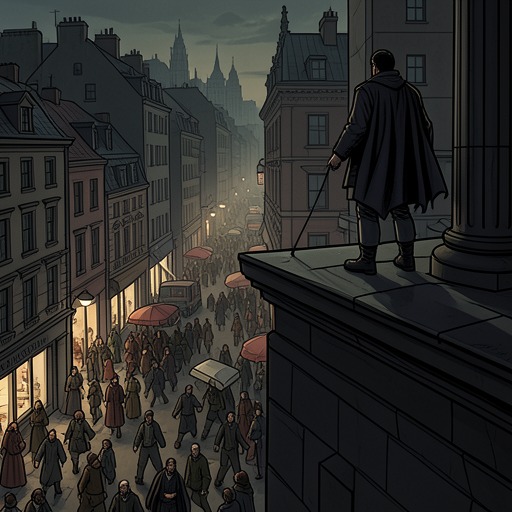
The department’s position worsens during the Gotham City blackout. The loss of electrical power removes a basic infrastructure of surveillance, communication, transportation, and coordinated response. Under those conditions, the Gotham City Police Department cannot function as though the city were merely experiencing another wave of crime. The blackout converts disorder into a citywide emergency, making the gap between legal command and practical control impossible to ignore.
Police, Emergency Rule, and Competing Sovereignties
During the later crisis, the Gotham City Police Department operates amid martial law in Gotham City and the broader disintegration of ordinary civic administration. Emergency conditions alter the meaning of police action: officers are no longer only enforcing standing rules but are participating in an improvised struggle over who can define and impose order. The department’s authority is therefore caught between government command above and street-level realities below.
The Sons of Batman make that conflict explicit. They emerge from the atmosphere created by Bruce Wayne / Batman’s return and transform admiration for him into collective action. Their takeover of Gotham City demonstrates that the symbols and methods associated with Batman can be detached from their originator and used as an alternative governing force. For the police, this is not simply a new gang problem. It is a challenge from an organized popular faction that claims to restore order while bypassing the department and the institutions that authorize it.
The contrast among these powers clarifies three different bases of obedience. The Gotham City Police Department possesses legal-bureaucratic legitimacy, but its effectiveness depends on functioning institutions and public compliance. The Mutant Gang relies primarily on intimidation and force. Bruce Wayne / Batman commands through personal charisma, fear, tactical superiority, and a reputation accumulated over years. The Sons of Batman inherit that symbolic capital while converting it into mass mobilization. The story does not erase the difference between these forms of power; instead, it shows how a crisis allows coercion and personal allegiance to rival law without necessarily possessing its procedures or accountability.
Relations with Bruce Wayne / Batman and James Gordon
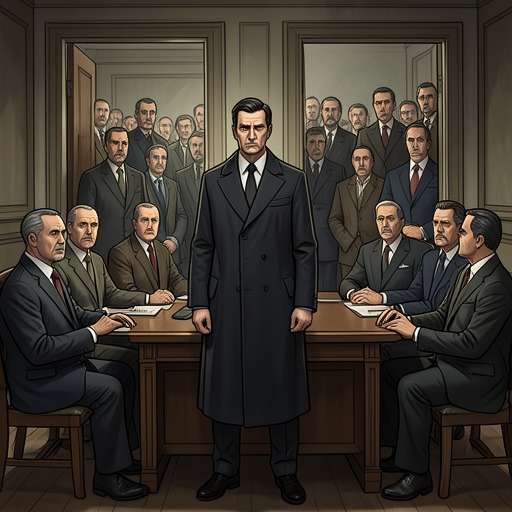
The Gotham City Police Department’s connection with Bruce Wayne / Batman is mediated most clearly through James Gordon. As the longtime police commissioner and a figure deeply familiar with Batman’s methods, James Gordon embodies the department’s uneasy recognition that official law and vigilantism have become interdependent. His perspective gives the police relationship an emotional and historical dimension: Batman is not an abstract violation of procedure but a recurring presence in the department’s institutional memory.
James Gordon’s association with Bruce Wayne / Batman also reveals the cost of that dependence. The department can benefit from Batman’s intervention against threats that overwhelm ordinary policing, but it cannot fully absorb him into its legal framework. The resulting arrangement is neither simple partnership nor simple opposition. It is a tense accommodation in which the police retain formal authority while Batman repeatedly acts where the institution is too slow, constrained, or outmatched.
As James Gordon’s career reaches its later stage, the department’s connection to Batman becomes part of a generational transition. The older police order and the aging vigilante face the same question: whether the identities and practices that once stabilized Gotham City can survive the decline of their original custodians. The department’s institutional continuity contrasts with Bruce Wayne / Batman’s intensely personal mission, yet both are threatened by time, exhaustion, and the city’s demand for a new response.
Breakdown, Recovery, and Narrative Significance
The Gotham City Police Department does not disappear when Gotham City’s order breaks down, but its role is repeatedly reduced, challenged, and redefined. During the Mutant Gang crisis, the blackout, the period of martial law in Gotham City, and the emergence of the Sons of Batman, the department remains a recognizable legal institution while losing exclusive control over violence and public space. Its persistence matters because it prevents the crisis from becoming a world without institutions; its weakness matters because the surviving institution cannot by itself restore social trust.
The department’s predicament also frames the story’s argument about Batman’s return. Bruce Wayne / Batman can produce immediate effects that official systems cannot, but the very need for such intervention testifies to institutional failure. Conversely, the expansion of Batman’s influence beyond Batman himself carries its own danger: once his image becomes a mobilizing emblem, disciplined purpose can become unauthorized collective force. The Gotham City Police Department stands at the center of this contrast, defending a legal order that has become inadequate while confronting replacements that may be more energetic but less accountable.
In the final movement, the police are part of a city forced to reconsider how order is made after catastrophe. The department’s significance is therefore not that it triumphs over every threat, but that it marks the boundary between public authority and the private or insurgent powers that repeatedly cross it. Through the Gotham City Police Department, the narrative asks whether legitimacy comes from law alone, from effective protection, from public allegiance, or from the ability to impose obedience when ordinary structures fail.